Mecca has witnessed a qualitative leap in its road network thanks to the integrated projects implemented by the Royal Commission for the City of Mecca and the Holy Sites, which have contributed to improving traffic efficiency and quality of life, keeping pace with rapid urban growth and facilitating access to the Grand Mosque and key areas in the Holy City.
Road Development in Makkah
The development work included the completion, construction, and operation of the four ring roads (the First, Second, Third, and Fourth), with a total length exceeding 105 kilometers, forming an interconnected network that links neighborhoods and major entry points and integrates with the public transportation system and smart parking facilities.
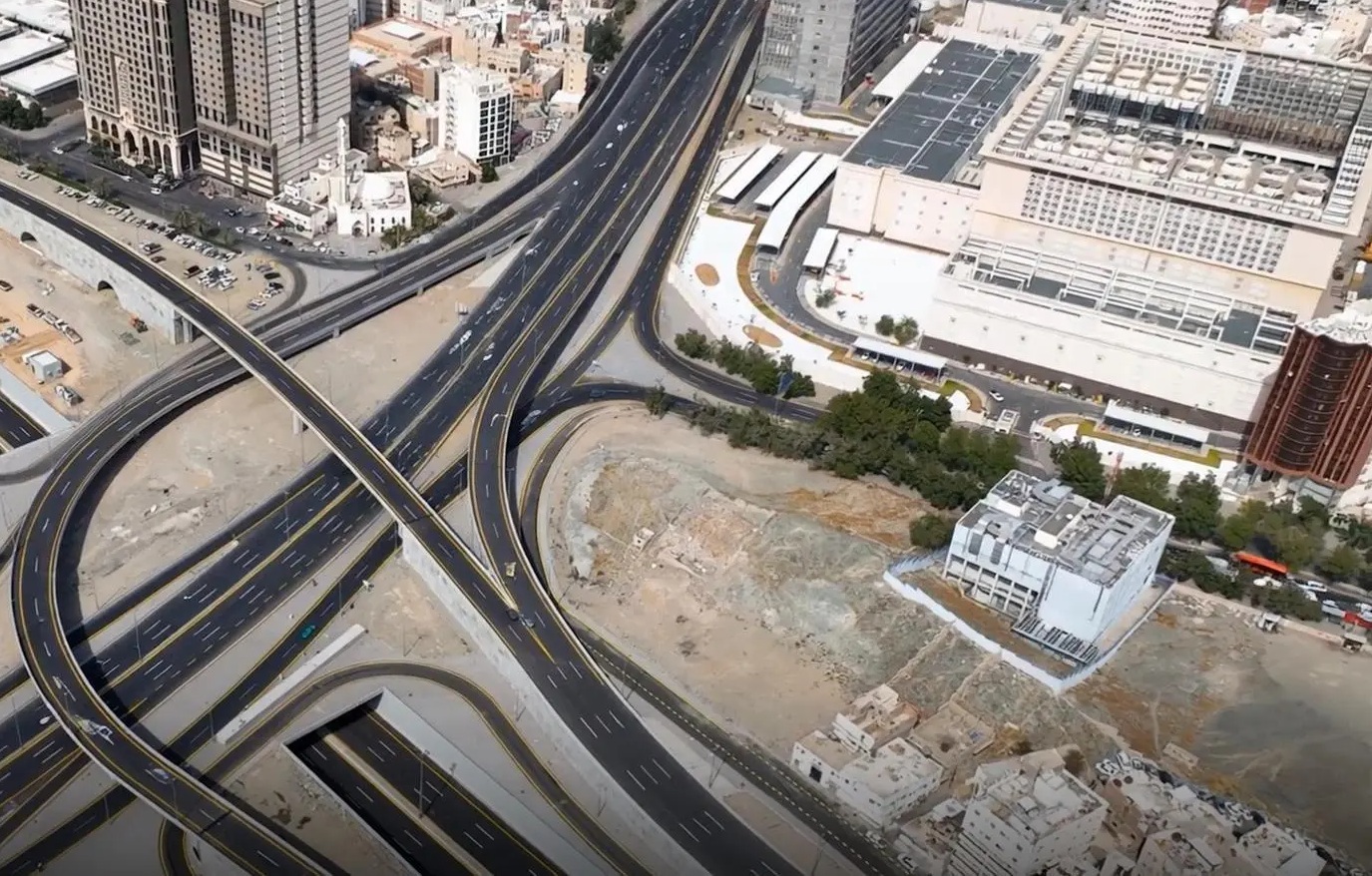
As part of efforts to enhance traffic safety, 49 smart pedestrian crossings were activated at key locations, 14 critical points within the city were addressed, and 7 major intersections were completed.
The Third Ring Road also saw the completion of the Prince Mutaib and Muzdalifah intersections, as well as the opening of sections totaling more than 10 kilometers, including service roads and major bridges, in addition to the inauguration of the 7.5-kilometer northern section extending from the Al-Tana’im intersection to the Jamarat area, which strengthened connectivity with the Holy Sites and enhanced infrastructure readiness during peak seasons.
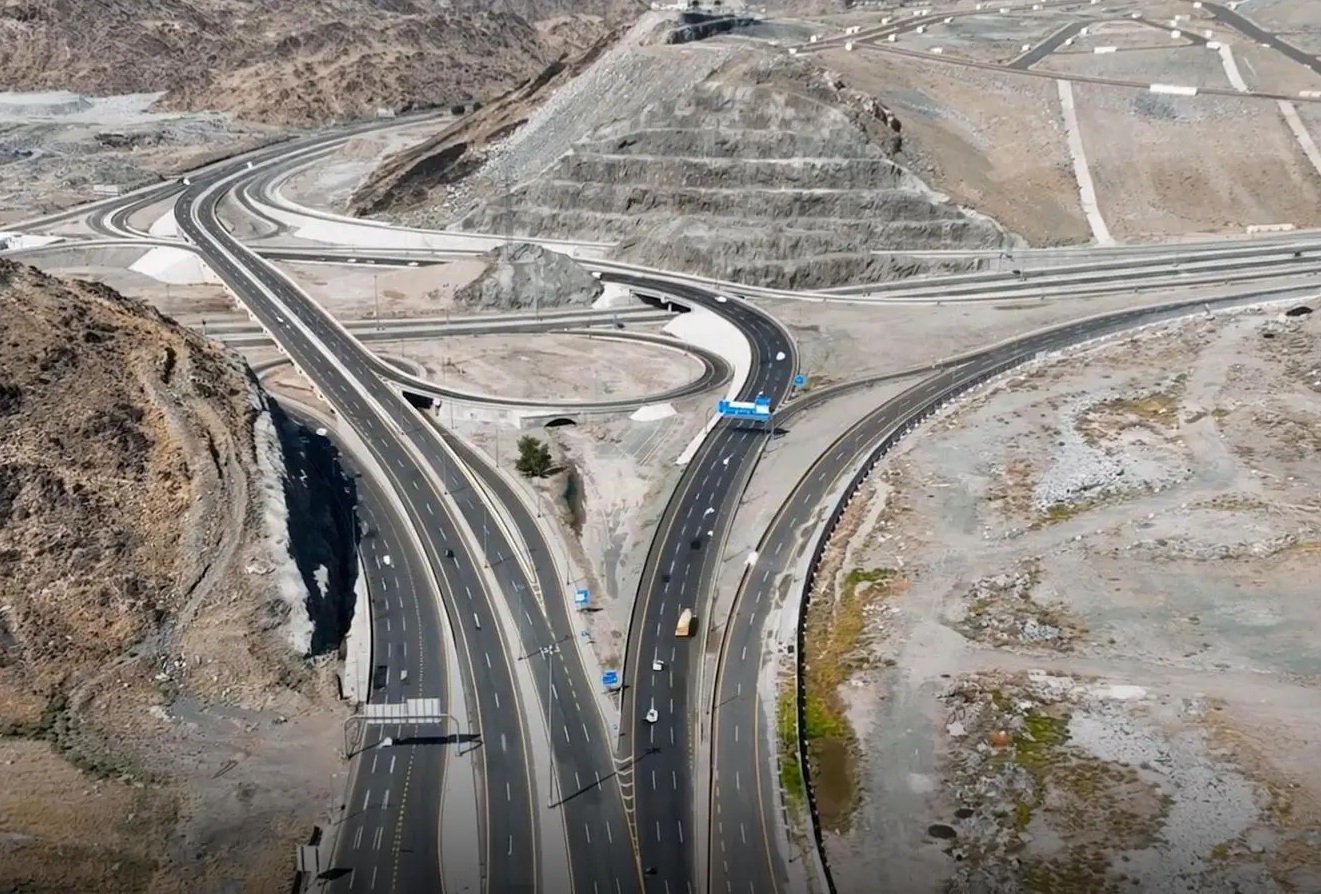
Al-Suleimaniyah Tunnels
On the Second Ring Road, work was completed on the 1.7-kilometer stretch from the Al-Suleimaniyah Tunnels to Hussein Arab Street, and the tunnel at the intersection with Masar was put into operation in coordination with the Ministry of Transportation, the Holy Capital Municipality, and Umm Al-Qura Company.
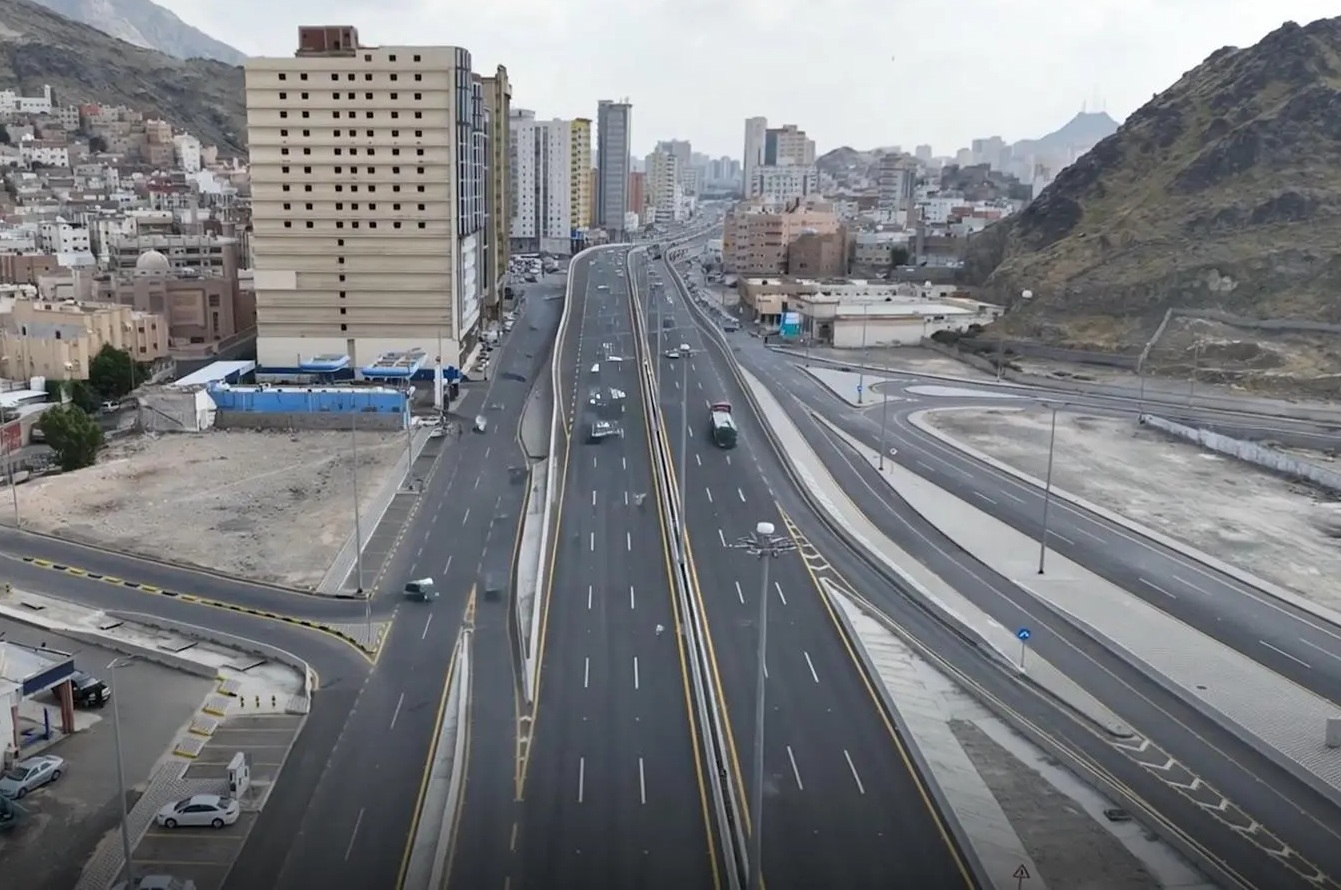
As for the Fourth Ring Road, two new junctions were opened in the Al-Rayyan and Al-Khadra neighborhoods to improve traffic flow, and its connection to King Faisal Road was completed, thereby strengthening links between major hubs and contributing to an 86% increase in traffic safety efficiency.
Engineer Saleh Al-Rashid, CEO of the Royal Commission, explained that this transformation reflects Makkah’s transition to a more integrated phase in its transportation system, noting that the completion and upgrading of ring roads and their integration with major projects have contributed to the development of an advanced transportation network that keeps pace with the city’s rapid urban growth.
Al-Rashid emphasized that the transportation and mobility system is one of the main pillars of the Royal Commission’s work, as it is directly linked to the quality of life and traffic management in the Holy City, emphasizing that this development forms a solid planning foundation that enhances Makkah’s ability to manage traffic during peak seasons and improve accessibility year-round.
This transformation is part of the Royal Commission for Makkah and the Holy Sites’ strategy to build a sustainable transportation system that supports comprehensive development, and contributes to enhancing the experience of the city’s residents and visitors, in line with the objectives of the Kingdom’s Vision 2030 to serve the guests of the Most Merciful and improve quality of life.