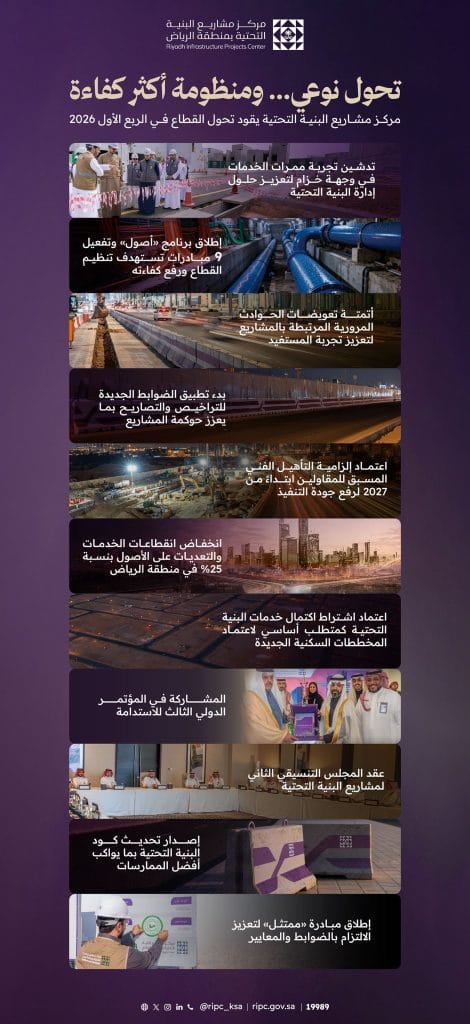

سجّل قطاع البنية التحتية في منطقة الرياض خلال الربع الأول من عام 2026 تحولًا نوعيًا في منظومته التنظيمية والتشغيلية، مدفوعًا بحزمة من السياسات والمبادرات النوعية التي أطلقها مركز مشاريع البنية التحتية، ضمن توجه إستراتيجي يستهدف رفع كفاءة التنفيذ، وتعزيز الحوكمة، والارتقاء بجودة الحياة في المنطقة.
وشملت أبرز هذه الجهود اعتماد اشتراط اكتمال خدمات البنية التحتية كمتطلب أساسي لاعتماد المخططات السكنية الجديدة، إلى جانب إطلاق برنامج “أصول” وتفعيل 9 مبادرات تنظيمية تسهم في تطوير القطاع ورفع كفاءته التشغيلية.
كما بدأ تطبيق ضوابط جديدة للتراخيص والتصاريح، بالتوازي مع أتمتة تعويضات الحوادث المرورية المرتبطة بالمشاريع، بما يعزز كفاءة الإجراءات ويرتقي بجودة المخرجات.
وفي خطوة استباقية تهدف إلى تعزيز جودة التنفيذ، أقر المركز إلزامية التأهيل الفني المسبق للمقاولين ابتداءً من عام 2027، كما دشن تجربة ممرات الخدمات في وجهة خزام، باعتبارها أحد الحلول الحديثة لإدارة البنية التحتية.
وعلى صعيد التكامل المؤسسي، عقد المركز اجتماع المجلس التنسيقي الثاني لمشاريع البنية التحتية، وشارك في المؤتمر الدولي الثالث للاستدامة، كما أصدر تحديث كود البنية التحتية بما يواكب أفضل الممارسات العالمية، وأطلق مبادرة “ممتثل” لتعزيز الالتزام بالضوابط والمعايير.
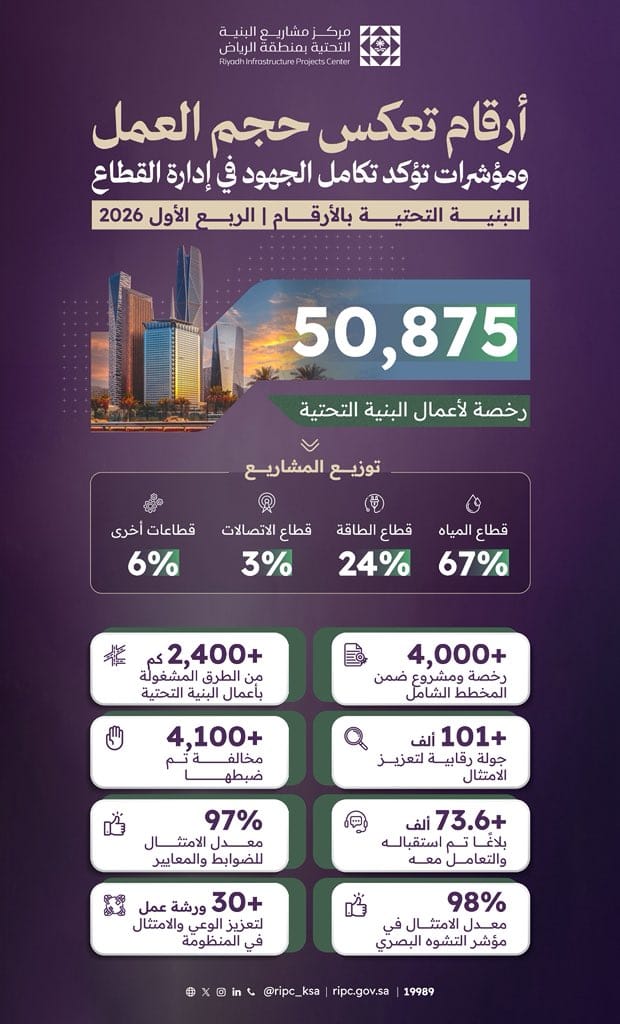
وأظهرت مؤشرات الأداء للربع الأول حجم النشاط المتنامي في القطاع، حيث بلغ عدد رخص أعمال البنية التحتية 50,875 رخصة، توزعت المشاريع فيها بنسبة 67% لقطاع المياه، و24% لقطاع الطاقة، و3% لقطاع الاتصالات، و6% لقطاعات أخرى.
كما تجاوز عدد الرخص والمشاريع ضمن المخطط الشامل 4,000 مشروع، فيما بلغت أطوال الطرق المشغولة بأعمال البنية التحتية 2,404 كيلومترات، في مؤشر يعكس تسارع وتيرة تنفيذ المشاريع في مختلف أنحاء المنطقة.
وفي إطار تعزيز الامتثال للضوابط والمعايير، نفّذ المركز 101,738 جولة رقابية، أسفرت عن ضبط 4,113 مخالفة، والتعامل مع 73,617 بلاغًا.
وسجلت المنظومة مستويات امتثال مرتفعة، بلغت 97% للضوابط والمعايير، و98% في مؤشر التشوه البصري، إلى جانب تنفيذ أكثر من 30 ورشة عمل استهدفت رفع مستوى الوعي وتعزيز الالتزام لدى الجهات ذات العلاقة.
ويعكس هذا الأداء المتسارع توجه مركز مشاريع البنية التحتية نحو بناء منظومة أكثر كفاءة واستدامة، تسهم في تحسين جودة الحياة، وتدعم تحقيق مستهدفات التنمية الحضرية في مدينة الرياض.