
تحويل تحديات الإمداد العالمية إلى فرص تعزز المحتوى المحلي
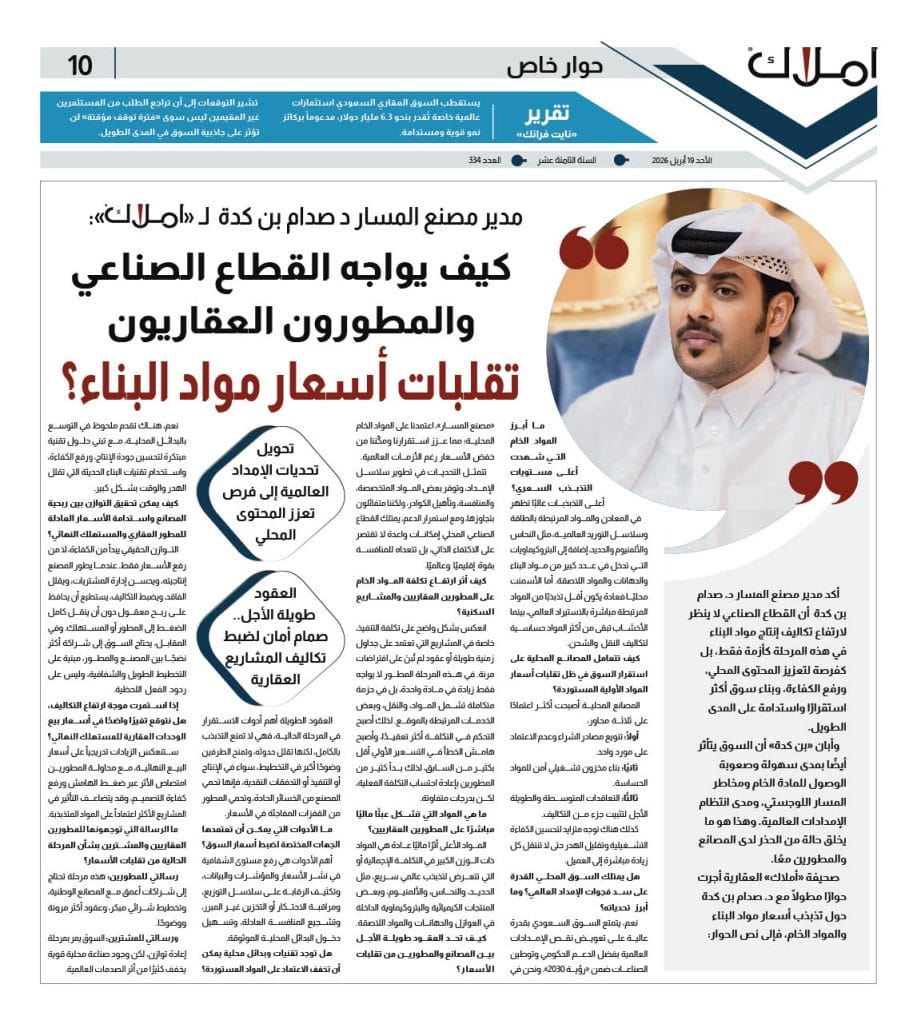
أكد مدير مصنع المسار د. صدام بن كدة، أن القطاع الصناعي لا ينظر لارتفاع تكاليف إنتاج مواد البناء في هذه المرحلة كأزمة فقط، بل كفرصة لتعزيز المحتوى المحلي، ورفع الكفاءة، وبناء سوق أكثر استقرارًا واستدامة على المدى الطويل.
وأبان «بن كدة» أن السوق يتأثر أيضًا بمدى سهولة وصعوبة الوصول للمادة الخام ومخاطر المسار اللوجستي، ومدى انتظام الإمدادات العالمية. وهذا هو ما يخلق حالة من الحذر لدى المصانع والمطورين معًا.
صحيفة «أملاك» العقارية أجرت حوارًا مطولًا مع د. صدام بن كدة حول تذبذب أسعار مواد البناء والمواد الخام، فإلى نص الحوار:
ما أبرز المواد الخام التي شهدت أعلى مستويات التذبذب السعري؟
أعلى التذبذبات غالبًا تظهر في المعادن والمواد المرتبطة بالطاقة وسلاسل التوريد العالمية، مثل النحاس والألمنيوم والحديد، إضافة إلى البتروكيماويات التي تدخل في عدد كبير من مواد البناء والدهانات والمواد اللاصقة. أما الأسمنت محليًا فعادة يكون أقل تذبذبًا من المواد المرتبطة مباشرة بالاستيراد العالمي، بينما الأخشاب تبقى من أكثر المواد حساسية لتكاليف النقل والشحن.
كيف تتعامل المصانع المحلية على استقرار السوق في ظل تقلبات أسعار المواد الأولية المستوردة؟
المصانع المحلية أصبحت أكثر اعتمادًا على ثلاثة محاور:
أولًا: تنويع مصادر الشراء وعدم الاعتماد على مورد واحد.
ثانيًا: بناء مخزون تشغيلي آمن للمواد الحساسة.
ثالثًا: التعاقدات المتوسطة والطويلة الأجل لتثبيت جزء من التكاليف.
كذلك هناك توجه متزايد لتحسين الكفاءة التشغيلية وتقليل الهدر حتى لا تنتقل كل زيادة مباشرة إلى العميل.
هل يمتلك السوق المحلي القدرة على سد فجوات الإمداد العالمي؟ وما أبرز تحدياته؟
نعم، يتمتع السوق السعودي بقدرة عالية على تعويض نقص الإمدادات العالمية بفضل الدعم الحكومي وتوطين الصناعات ضمن «رؤية 2030». ونحن في «مصنع المسار»، اعتمدنا على المواد الخام المحلية؛ مما عزز استقرارنا ومكّننا من خفض الأسعار رغم الأزمات العالمية.
تتمثل التحديات في تطوير سلاسل الإمداد، وتوفر بعض المواد المتخصصة، والمنافسة، وتأهيل الكوادر، ولكننا متفائلون بتجاوزها، ومع استمرار الدعم، يمتلك القطاع الصناعي المحلي إمكانات واعدة لا تقتصر على الاكتفاء الذاتي، بل تتعداه للمنافسة بقوة إقليميًا وعالميًا.
كيف أثر ارتفاع تكلفة المواد الخام على المطورين العقاريين والمشاريع السكنية؟
انعكس بشكل واضح على تكلفة التنفيذ، خاصة في المشاريع التي تعتمد على جداول زمنية طويلة أو عقود لم تُبنَ على افتراضات مرنة. في هذه المرحلة المطور لا يواجه فقط زيادة في مادة واحدة، بل في حزمة متكاملة تشمل المواد، والنقل، وبعض الخدمات المرتبطة بالموقع. لذلك أصبح التحكم في التكلفة أكثر تعقيدًا، وأصبح هامش الخطأ في التسعير الأولي أقل بكثير من السابق، لذلك بدأ كثير من المطورين بإعادة احتساب التكلفة الفعلية، لكن بدرجات متفاوتة.
ما هي المواد التي تشكل عبئًا ماليًا مباشرًا على المطورين العقاريين؟
المواد الأعلى أثرًا ماليًا عادة هي المواد ذات الوزن الكبير في التكلفة الإجمالية أو التي تتعرض لتذبذب عالمي سريع، مثل الحديد، والنحاس، والألمنيوم، وبعض المنتجات الكيميائية والبتروكيماوية الداخلة في العوازل والدهانات والمواد اللاصقة.
كيف تحد العقود طويلة الأجل بين المصانع والمطورين من تقلبات الأسعار؟
العقود الطويلة أهم أدوات الاستقرار في المرحلة الحالية، فهي لا تمنع التذبذب بالكامل، لكنها تقلل حدوثه، وتمنح الطرفين وضوحًا أكبر في التخطيط، سواء في الإنتاج أو التنفيذ أو التدفقات النقدية، فإنها تحمي المصنع من الخسائر الحادة، وتحمي المطور من القفزات المفاجئة في الأسعار.
ما الأدوات التي يمكن أن تعتمدها الجهات المختصة لضبط أسعار السوق؟
أهم الأدوات هي رفع مستوى الشفافية في نشر الأسعار والمؤشرات والبيانات، وتكثيف الرقابة على سلاسل التوزيع، ومراقبة الاحتكار أو التخزين غير المبرر، وتشجيع المنافسة العادلة، وتسهيل دخول البدائل المحلية الموثوقة.
هل توجد تقنيات وبدائل محلية يمكن أن تخفف الاعتماد على المواد المستوردة؟
نعم، هناك تقدم ملحوظ في التوسع بالبدائل المحلية، مع تبني حلول تقنية مبتكرة لتحسين جودة الإنتاج، ورفع الكفاءة، واستخدام تقنيات البناء الحديثة التي تقلل الهدر والوقت بشكل كبير.
كيف يمكن تحقيق التوازن بين ربحية المصانع واستدامة الأسعار العادلة للمطور العقاري والمستهلك النهائي؟
التوازن الحقيقي يبدأ من الكفاءة، لا من رفع الأسعار فقط. عندما يطور المصنع إنتاجيته، ويحسن إدارة المشتريات، ويقلل الفاقد، ويضبط التكاليف، يستطيع أن يحافظ على ربح معقول دون أن ينقل كامل الضغط إلى المطور أو المستهلك. وفي المقابل، يحتاج السوق إلى شراكة أكثر نضجًا بين المصنع والمطور، مبنية على التخطيط الطويل والشفافية، وليس على ردود الفعل اللحظية.
إذا استمرت موجة ارتفاع التكاليف، هل نتوقع تغيرًا واضحًا في أسعار بيع الوحدات العقارية للمستهلك النهائي؟
ستنعكس الزيادات تدريجياً على أسعار البيع النهائية، مع محاولة المطورين امتصاص الأثر عبر ضغط الهامش ورفع كفاءة التصميم، وقد يتضاعف التأثير في المشاريع الأكثر اعتماداً على المواد المتذبذبة.
ما الرسالة التي توجهونها للمطورين العقاريين والمشترين بشأن المرحلة الحالية من تقلبات الأسعار؟
رسالتي للمطورين: هذه مرحلة تحتاج إلى شراكات أعمق مع المصانع الوطنية، وتخطيط شرائي مبكر، وعقود أكثر مرونة ووضوحًا.
رسـالتي للمشترين: السوق يمر بمرحلة إعادة توازن، لكن وجود صناعة محلية قوية يخفف كثيرًا من أثر الصدمات العالمية.