
جددت وزارة البلديات والإسكان التأكيد على إتاحة التقديم للحصول على «مدة إضافية» لملاك الأراضي البيضاء الخاضعة للرسوم، بما يتيح لهم استكمال أعمال التطوير أو بيع الأراضي وفق ضوابط تنظيمية محددة.
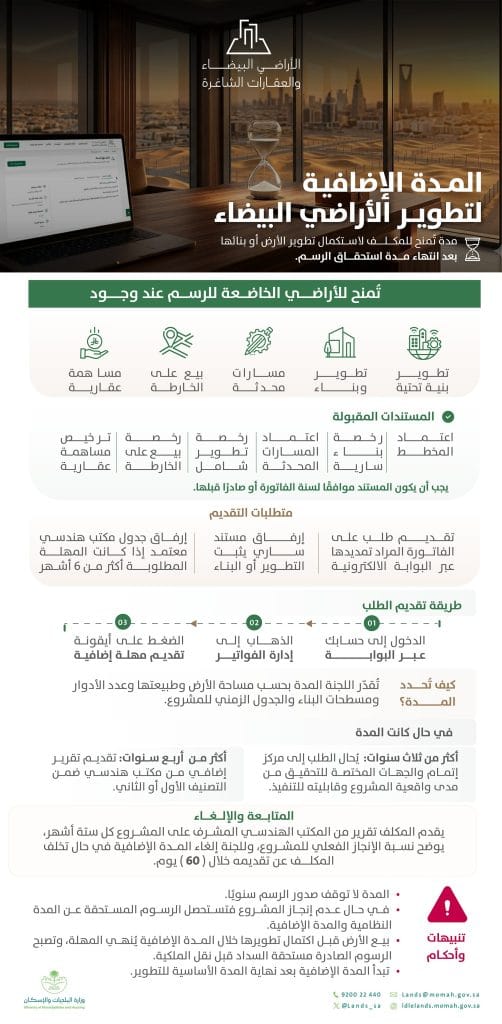
وأوضحت الوزارة أن منح المهلة الإضافية يرتبط بوجود مسار تطوير فعلي للأرض، يشمل توافر رخصة بناء سارية، أو اعتماد مخطط، أو عقود لتنفيذ البنية التحتية، أو رخص وعقود للبيع على الخارطة، إضافة إلى وجود مساهمة عقارية مرخصة أو أي مسارات تطوير معتمدة.
المستندات المطلوبة
وأكدت أن المستندات المطلوبة للحصول على المهلة تتضمن رخص البناء السارية، واعتماد المخططات، ورخص البيع على الخارطة، وعقود تنفيذ البنية التحتية، مع ضرورة أن تكون جميع الوثائق نظامية وسارية المفعول عند التقديم.
وبيّنت الوزارة أن طلب الحصول على المهلة يتم عبر البوابة الإلكترونية الرسمية، من خلال الدخول إلى حساب المستفيد، ثم التوجه إلى خدمة إدارة الفواتير واختيار طلب «تقديم مهلة إضافية»، واستكمال الإجراءات وإرفاق المستندات المطلوبة.
كما يشترط تقديم جدول زمني معتمد من مكتب هندسي يوضح مراحل تنفيذ المشروع، على ألا تقل مدة الجدول عن ستة أشهر لإثبات جدية التنفيذ. وفيما يتعلق بتحديد مدة المهلة، أوضحت الوزارة أن اللجنة المختصة تقيّم الطلبات بناءً على عدة معايير، تشمل مساحة الأرض، وطبيعة المشروع، وعدد الأدوار، ومسطحات البناء، إضافة إلى الجدول الزمني المعتمد للتنفيذ.
المشاريع الكبيرة
وأضافت أن المشاريع التي تتجاوز مدة تطويرها ثلاث سنوات تُحال إلى مركز إتمام والجهات المختصة لدراسة جدواها والتأكد من قابليتها للتنفيذ، فيما تُلزم المشاريع التي تتجاوز أربع سنوات بتقديم تقرير إضافي من مكتب هندسي معتمد يوضح مراحل الإنجاز.
وأكدت الوزارة أن متابعة الالتزام خلال فترة المهلة تتم عبر تقارير دورية يقدمها المكتب الهندسي المشرف كل ستة أشهر، تتضمن نسب الإنجاز الفعلية للمشروع، مشيرة إلى أن عدم الالتزام بالتنفيذ خلال المدة المحددة يؤدي إلى إلغاء المهلة الإضافية، ما لم يتم تقديم مبررات خلال 60 يومًا.
وشددت الوزارة على أن منح المهلة الإضافية لا يعني إيقاف صدور الرسوم السنوية، مؤكدة أن الرسوم تبقى مستحقة عن كامل الفترة في حال عدم إنجاز المشروع خلال المهلة المحددة، كما يُمنع بيع الأرض قبل اكتمال تطويرها أثناء سريان المهلة، وتظل الفواتير الصادرة واجبة السداد وغير قابلة للإلغاء.
وأشارت الوزارة إلى أن هذه الإجراءات تأتي ضمن جهودها لتنظيم سوق الأراضي وتحفيز تطوير الأراضي غير المستغلة داخل النطاق العمراني، بما يسهم في زيادة المعروض العقاري وتحقيق التوازن في السوق ورفع كفاءة استخدام الأراضي دعمًا لمستهدفات التنمية الحضرية في المملكة.