
Saudi Arabia continues to consolidate its position as one of the fastest growing tourism destinations in the world, driven by Saudi Vision 2030, which has transformed the tourism sector into a key pillar for diversifying the national economy. The sector has recorded historic leaps in visitor numbers, spending and hotel capacity growth, with the influx of huge investments, infrastructure expansion and destination diversification, making it one of the most prominent engines of economic growth in the Kingdom.
Saudi Arabia continues to be one of the fastest growing tourism destinations in the world.
Unprecedented expansion in tourist numbers
The Saudi tourism sector has witnessed remarkable growth in recent years, with the total number of tourists (local and international) rising from about 63 million in 2016 to about 123 million by the end of 2025, according to official data, revealing the success of tourism policies in enhancing the attractiveness of the Kingdom as a diverse global destination combining religious, recreational and cultural tourism.
During the first quarter of 2026, the total number of tourists reached 37.2 million, driven by the growth of domestic tourism, which recorded 28.9 million tourists, an increase of 16% compared to the same period in 2025, indicating the strength of domestic demand and the continuity of tourism activity despite regional challenges.
Tourism spending jumps
In terms of spending, the sector recorded a strong performance, with total tourist spending in 2025 reaching SAR 304 billion, a record figure that reflects the strength of demand for tourism services in the Kingdom. In the first quarter of 2026, total tourism spending (local and expatriate) increased to about SAR 82.7 billion, while domestic tourism spending recorded about SAR 34.7 billion, an increase of 8%, confirming the continued growth of domestic demand as a key driver for the sector.
Domestic tourism during the school vacation season for Ramadan and Eid Al Fitr recorded spending of SAR 10.2 billion, a growth of 5%, with domestic tourists reaching 10 million during that period.
Domestic tourism also recorded spending of SAR 10.2 billion during the school vacation season for the month of Ramadan and Eid Al Fitr, a growth of 5%.
Solid growth in hospitality sector and occupancy rates
the hospitality sector witnessed a significant expansion, with the number of licensed hospitality facilities rising to 5,937 by the end of Q4 2025, a growth of 34.2% YoY, spread between hotels and serviced apartments. Hotels recorded an occupancy rate of 57.3% during Q4 2025, while serviced apartments recorded an occupancy rate of 55.9%, with the average length of stay rising to 3.8 nights for hotels and 2.2 nights for apartments.
In Q1 2026, average occupancy in hospitality facilities reached 59%, with Medina leading with 82%, followed by Makkah with 60% and Jeddah with 59%, reflecting strong demand for religious and leisure destinations.
In Q1 2026, average occupancy in hospitality facilities reached 59%, with Medina leading with 82%, followed by Makkah with 60% and Jeddah with 59%.
Wide employment and women empowerment
The tourism sector has contributed to creating huge job opportunities, with the number of employees in tourism activities exceeding 1.2 million, of which more than 1.03 million in the fourth quarter of 2025, with an annual growth of 6.6%.The sector is one of the most prominent employment engines in the Kingdom, where the number of Saudis working in the sector reached about 247 thousand employees, accounting for 24% of the total workers, while female labor accounted for about 13.3%, with the participation of Saudi women rising to about 47% of the total Saudis working in the sector by the end of 2025.
Massive tourism investments and projects
The Kingdom is witnessing a major expansion in tourism projects, with the Minister of Tourism announcing that the private sector is currently driving growth, with plans to build about 150,000 new hotel rooms over the coming years, as part of a strategy to boost the sector's capacity.
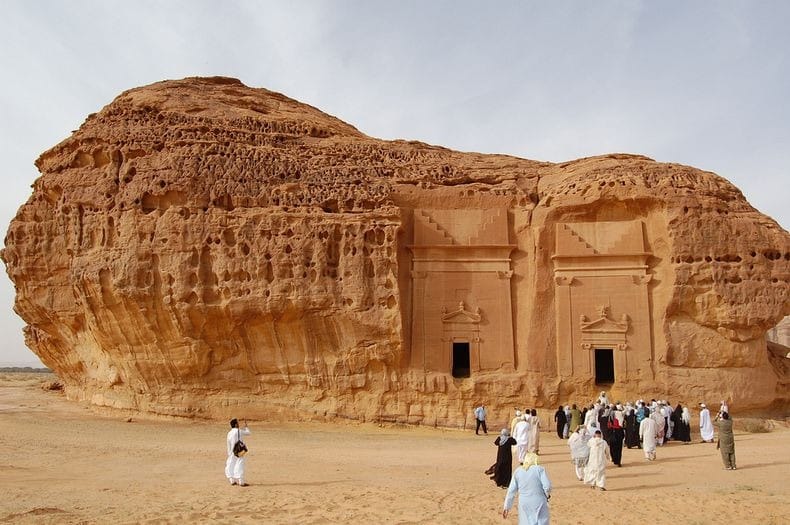
Projects also include the development of major tourist destinations such as the Red Sea, AlUla and Jeddah, as well as new city projects and entertainment destinations within Vision 2030, which aims to transform the Kingdom into an integrated global tourism destination.
The Kingdom is seeing a major expansion of tourism projects, with the private sector currently leading the growth.
Vision 2030 Targets The Kingdom is also working to enhance international cooperation, attract international organizations, and host regional offices such as the United Nations Tourism Organization in Riyadh.
Saudi Arabia aims to raise the contribution of the tourism sector to GDP to 10%, compared to about 3% when the vision was launched in 2016, in addition to enhancing the sector's contribution to employment, which currently rises to about 5%, according to official statements.
The Kingdom is also working to enhance international cooperation, attract international organizations, and host regional offices such as the United Nations Tourism Organization in Riyadh, to support its position as a global tourism center.