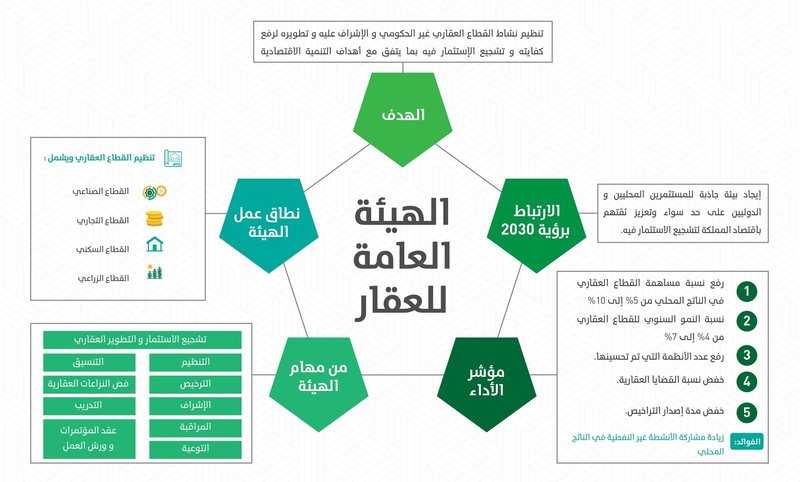

The draft “Organization of the Public Authority for Real Estate” revealed, through fifteen articles, the features of the establishment of the new authority and the framework of its powers and dealings with public and private sector institutions with regard to managing and prioritizing the real estate sector in the Kingdom, and the mechanism for establishing the organizational, administrative and financial structure of the authority, while defining the powers of the governor of the authority and the members of the board of directors, in light of the general objectives assigned to the authority and the mechanism for achieving these objectives on the ground.
The draft "Organization of the Public Authority for Real Estate
Article Four: Composition of the Board of Directors of the Authority
. <Article 4 of the draft stipulates that the Authority shall have a Board of Directors headed by the Minister of Housing and the membership of each of the Governor of the Authority, who will be a deputy and a member of the Board, in addition to the membership of representatives of the Ministry of Housing, Ministry of Justice, Ministry of Finance, Ministry of Trade and Investment, Ministry of Energy, Industry and Mineral Revolution, Ministry of Municipal and Rural Affairs, Ministry of Economy and Planning, in addition to three members from the relevant private sector, appointed by a decision of the Council of Ministers, upon a proposal from the Minister of Housing, and their membership shall be for three years, renewable once, and the article stipulates that the rank of the representatives of theArticle Five: Powers and Powers of the Board of the Authority
<Article 5 of the draft regulation focuses on the powers of the Board of the Authority, stating that the Board of the Authority has supreme authority, supervises its administration and conducts its affairs, and may take the necessary decisions and actions to achieve its objectives, in accordance with the provisions of this regulation, as the Board has the right to supervise the implementation of the Authority's tasks assigned to it, set the policies that the Authority follows to achieve its objectives, adopt the necessary plans and programs, supervise their implementation, approve the organizational structure and internal work rules, approve the financial compensation for the licenses issued by the Authority, approve the financial compensation charged by the Authority for the works and services provided by it, and provide it with the necessary services and services.Article Six: Meetings and voting on decisions
<The sixth article of the draft organization deals with the meetings of the Authority, stating: "Its meetings will be held at the headquarters of the Authority, at the invitation of the President, and may, when necessary, be held in another place, and that the meetings are periodic, and 4 times a year, and the President may call it to meet whenever the need arises, or when at least three members request it, and the Council meeting is considered valid if it is attended by a majority of members, including the President or his deputy, and decisions are issued by a majority of the members present, and in case of equality of members, the side with which the chairman of the meeting voted prevails, and the Council's deliberations and decisions are recorded in minutes, signed by the chairman of the meeting and the members present. A member of the Council may not abstain from voting or authorize another member to vote for him in his absence, and the objecting member may record his objection and the reasons for it in the minutes of the Council's meeting, and the member may not disclose any of the secrets of the Authority because of his membership in the Council. At the same time, the Council may invite any specialists and advisors to attend its meetings without having the right to vote, and the Council shall have a secretary from among the employees of the Authority, chosen by the President upon the nomination of the Governor, who shall be responsible for the secretariat of the Council, preparing for meetings and recording deliberations and decisions.