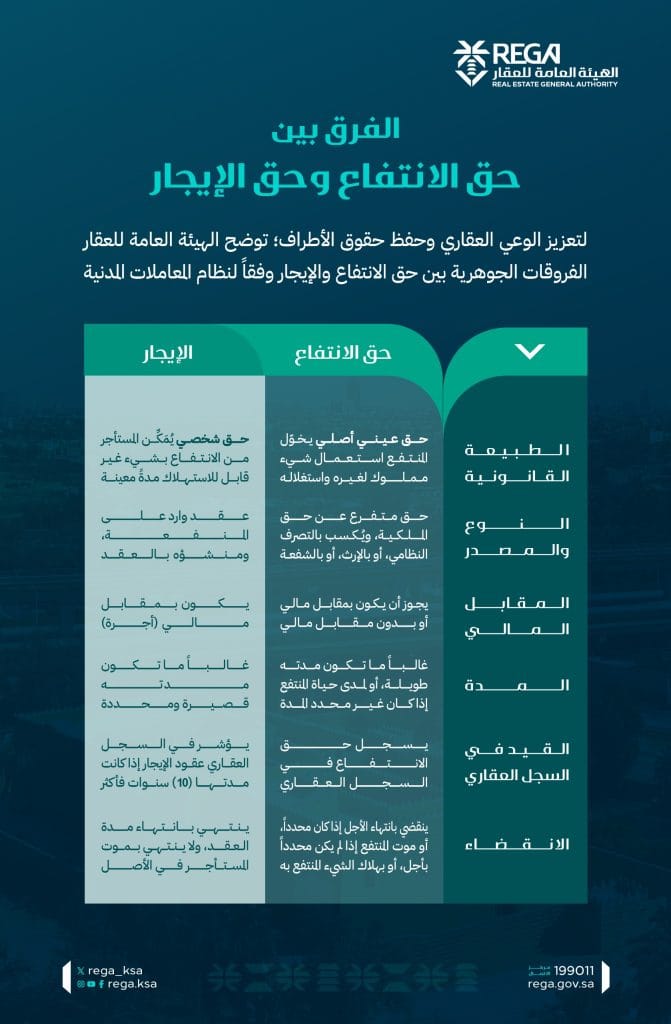

لتعزيز الوعي العقاري وحفظ حقوق الأطراف، توضح الهيئة العامة للعقار الفروقات الجوهرية بين حق الانتفاع وحق الإيجار، وذلك وفقًا لنظام المعاملات المدنية، بما يسهم في فهم طبيعة كل منهما من حيث الأساس القانوني والمدة والمقابل المالي وآلية الانقضاء.
يبين حق الانتفاع أنه حق عيني أصلي يخول المنتفع استعمال شيء مملوك لغيره واستغلاله. ويُعد هذا الحق متفرعًا عن حق الملكية، ويكتسب بالتصرف النظامي أو بالإرث أو بالشفعة. كما يجوز أن يكون بمقابل مالي أو دون مقابل. وغالبًا ما تكون مدته طويلة، أو تستمر طوال حياة المنتفع إذا لم تُحدد مدة معينة. ويتم تسجيل حق الانتفاع في السجل العقاري. وينقضي هذا الحق بانتهاء الأجل إذا كان محددًا، أو بوفاة المنتفع إذا لم يكن محددًا بأجل، أو بهلاك الشيء المنتفع به.
أما حق الإيجار فهو حق شخصي يُمكّن المستأجر من الانتفاع بشيء غير قابل للاستهلاك لمدة معينة. وينشأ هذا الحق بعقد وارد بين المؤجر والمستأجر. ويكون دائمًا بمقابل مالي (أجرة). وغالبًا ما تكون مدة الإيجار قصيرة ومحددة. ويتم التأشير على عقود الإيجار في السجل العقاري إذا تجاوزت مدتها عشر سنوات. وينتهي عقد الإيجار بانتهاء مدته، ولا ينتهي بوفاة المستأجر في الأصل.