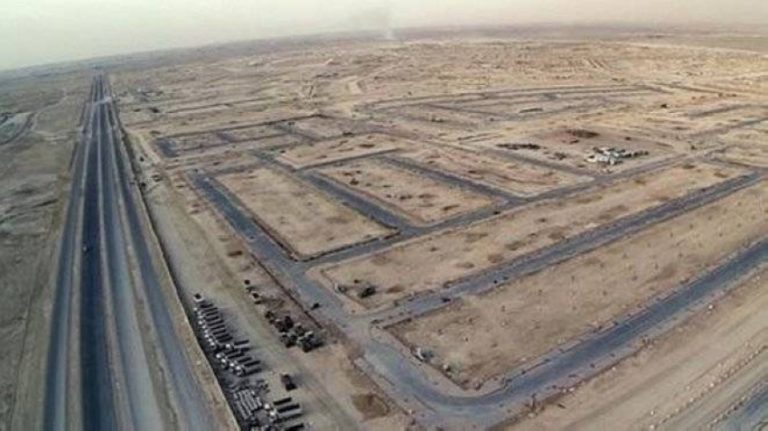

The announcement by the Ministry of Municipalities and Housing in Saudi Arabia of the continued application of white land fees sparked a wide debate in the real estate market, as some owners started looking for ways to circumvent the system, most notably by giving land as gifts to their relatives by dividing it into less than 5000 square meters as a way to evade paying the imposed fees.
Specialists believe that these practices may represent a loophole in the current system if not strictly addressed, as some owners seek to transfer the ownership of their land through gift contracts that only aim to evade the obligations of the fees. Specialists believe that these practices may represent a loophole in the current system if not strictly addressed, as some owners seek to transfer the ownership of their land in a fictitious manner through gift contracts that only aim to evade financial obligations.
Specialists emphasize that such practices may represent a loophole in the current system if not strictly addressed. Experts stress that such procedures, if left without clear controls, may weaken the effectiveness of the program, which was originally launched to balance the real estate market and increase the supply of developed land.
Economists demand that the current system should be strictly enforced. <Economists call for the need to tighten control over grant contracts by verifying their seriousness and real purpose, in addition to linking them to specific criteria that prevent them from being used as a means of evasion. Others suggest imposing time restrictions on the transfer of property, so that the new owner is exempt from fees only after a certain period of time, to ensure that the gift process was done for real considerations and not just a formality.
This comes at a time when the government's efforts to curb tax evasion come at a cost. This comes at a time when the ministry emphasizes that white land fees are an effective tool to push owners to develop their lands or offer them on the market, which contributes to reducing the prices of residential lands and increasing the supply, which is in line with the goals of Saudi Vision 2030 to promote home ownership by citizens.
Ministry of Municipalities The Ministry of Municipalities and Housing has called on all owners of white lands located within the specified geographical ranges in the city of Riyadh to expedite their registration through the program's electronic portal within 60 days, warning that failure to comply with the registration may expose owners to fines of up to 100% of the value of the fee.
Failure to register may expose owners to fines of up to 100% of the value of the fee.
The ministry explained that the determination of the geographical ranges came based on a careful study of the urban development priorities in the capital, where it was divided into five segments according to varying fee rates aimed at stimulating balanced urban development and increasing the real estate supply.
The tranches were distributed as follows:
The first tranche (highest priority): 10% of land value.
Second tranche (high priority): 7.5%.
Tranche Three (Medium Priority): 5%.
Fourth tranche (low priority): 2.5%.
Fifth tier (non-priority): No fees are charged, and are counted in the total land owned by the taxpayer within the city.
The ministry emphasized that the fifth tranche is not subject to any fees. The ministry emphasized that all revenues from white land fees will be fully allocated to support housing projects, contributing to increasing the supply of housing units and meeting the needs of citizens.
The ministry emphasized that all revenues from white land fees will be fully allocated to support housing projects.