
يُعد حق الانتفاع أحد الحقوق العينية الأصلية التي تمنح المستفيد إمكانية استخدام العقار واستغلاله دون تملكه، بما يحقق توازنًا بين تمكين المنتفع من الاستفادة الاقتصادية من العقار والحفاظ على حقوق المالك. ويعزز هذا الحق مرونة الاستثمار واستقرار المعاملات العقارية ضمن إطار نظامي واضح يحدد الحقوق والالتزامات بين الأطراف. أوضحت الهيئة العامة للعقار أن حق الانتفاع بالعقار يُعد أحد الحقوق العينية الأصلية، ويمنح شخصًا يُعرف بالمنتفع سلطة استعمال عقار مملوك للغير واستغلاله لمدة معينة أو طوال حياة المنتفع إذا لم تكن المدة محددة، دون أن يكون له حق التصرف في ملكية العقار.
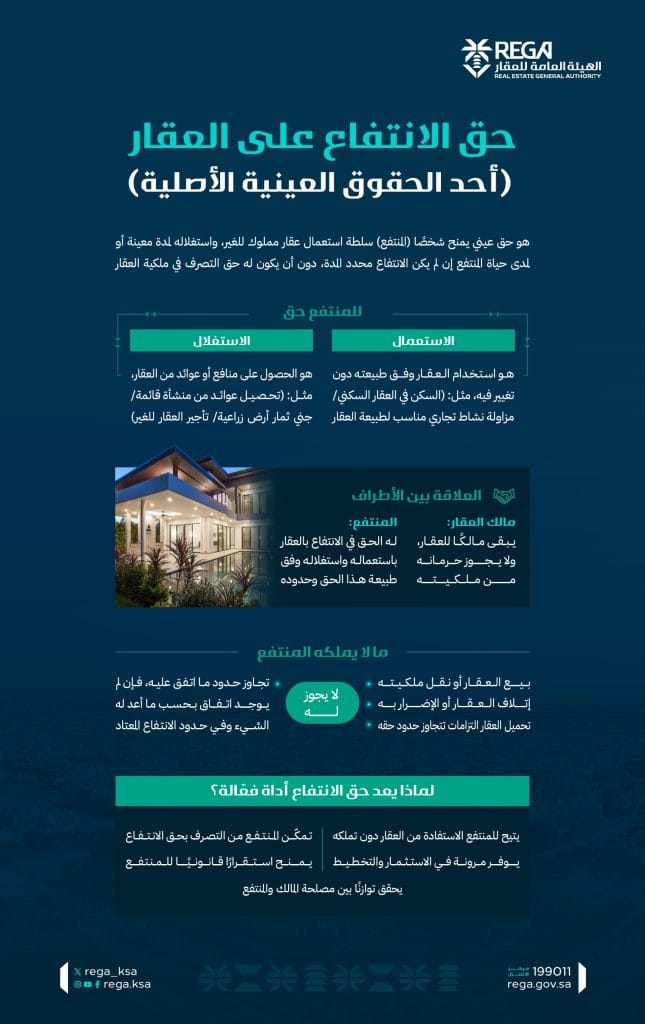
وبيّنت الهيئة أن المنتفع يملك حق الاستعمال والاستغلال وفق طبيعة العقار وحدود الحق الممنوح له. ويقصد بالاستعمال استخدام العقار بما يتناسب مع طبيعته دون إحداث تغيير فيه، مثل السكن في العقار السكني أو ممارسة نشاط تجاري يتوافق مع طبيعة العقار. أما الاستغلال فيتمثل في الحصول على منافع أو عوائد من العقار، مثل تحصيل عوائد من منشأة قائمة أو جني ثمار أرض زراعية أو تأجير العقار للغير.
وأكدت أن العلاقة بين الأطراف تقوم على احتفاظ مالك العقار بملكيته الكاملة وعدم حرمانه منها، مقابل تمتع المنتفع بحق استعمال العقار واستغلاله وفق طبيعة الحق وحدوده النظامية.
وأشارت الهيئة إلى أن المنتفع لا يملك بيع العقار أو نقل ملكيته، كما لا يجوز له إتلاف العقار أو الإضرار به أو تحميله التزامات تتجاوز حدود حقه. وفي حال تجاوز المنتفع ما تم الاتفاق عليه، فإن ذلك يخضع لما تم التوافق عليه بين الأطراف وفي حدود الانتفاع المعتادة. ولفتت إلى أن حق الانتفاع يمثل أداة فعالة تتيح للمنتفع الاستفادة من العقار دون تملكه، وتوفر مرونة في الاستثمار والتخطيط طويل الأجل، كما تمنحه استقرارًا قانونيًا يمكنه من التصرف في حق الانتفاع ضمن الحدود النظامية.
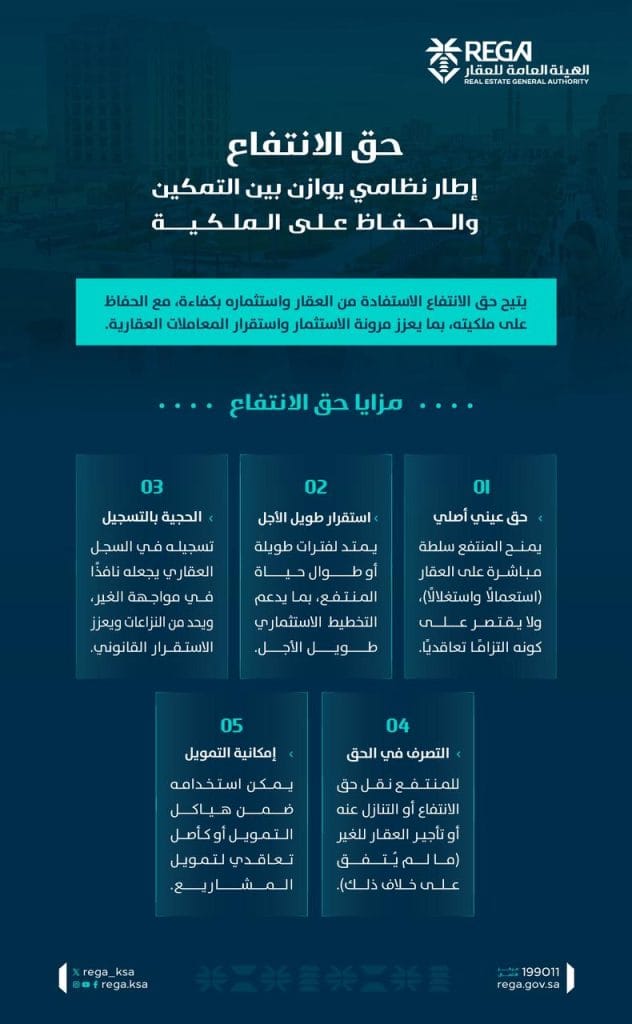
ومن أبرز مزايا حق الانتفاع أنه حق عيني أصلي يمنح المنتفع سلطة مباشرة على العقار استعمالًا واستغلالًا، ولا يقتصر على كونه التزامًا تعاقديًا فقط. كما يتميز بإمكانية استمراره لفترات طويلة أو طوال حياة المنتفع، بما يدعم التخطيط الاستثماري طويل الأجل.
ويتيح هذا الحق للمنتفع نقل حق الانتفاع أو التنازل عنه أو تأجير العقار للغير ما لم يُتفق على خلاف ذلك، إلى جانب تمتعه بالحجية القانونية من خلال تسجيله في السجل العقاري، الأمر الذي يجعله نافذًا في مواجهة الغير ويحد من النزاعات ويعزز الاستقرار القانوني.
كما يمكن استخدام حق الانتفاع ضمن هياكل التمويل أو كأصل تعاقدي لتمويل المشاريع، بما يسهم في تعزيز كفاءة الاستفادة من الأصول العقارية وتحقيق التوازن بين مصالح المالك والمنتفع.