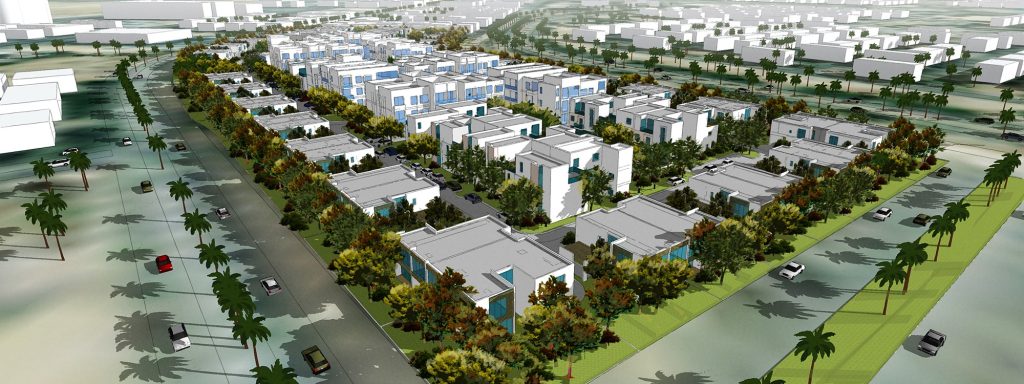

The world is on the verge of a new revolution in urban planning for the cities of the future; modern cities are moving toward designing their services—particularly health and recreational services—to suit the needs of their residents and to create a new, more modern and distinctive urban future. This step allows each city to have its own character and unique services that align with its needs and set it apart from other cities.
Technology Solves Housing Problems
A recent report issued by KPMG Professional Consulting in Saudi Arabia revealed a halt in the construction of “traditional central cities” due to the repercussions of the COVID-19 pandemic, which has played a significant role in the changes currently taking place in urban planning.
The report noted that the lack of affordable housing remains a major challenge to the progress of many cities. It also addressed the feasibility of using technology to address various issues that hinder progress toward a better future, in addition to investing in digital capabilities and new data to build new horizons for innovation, while taking into account that not all individuals are digitally empowered. The report praised some of the digital solutions adopted by the Kingdom, aimed at providing housing support, such as the Sakani platform.
Urban Community Development
In this regard, Ismail bin Daham Al-Ani, Head of the Government and Public Sector at KPMG in Saudi Arabia, said: “Cities are now at a historic turning point, where health, sustainability, and community well-being are taking center stage and are at the top of residents” priorities in a way we have never seen before.“ He added: ”The traditional mechanisms that have long governed urban planning are now being put to the test."
It is worth noting that the Kingdom’s government seeks to develop urban communities centered on people, which is why it has launched several innovative projects, including “The Line“— ”The Line,” which is part of the massive “Neom” project launched by the Kingdom a few years ago, with a total cost of $500 billion. The project aims to serve as a model for what urban communities could look like in the future.