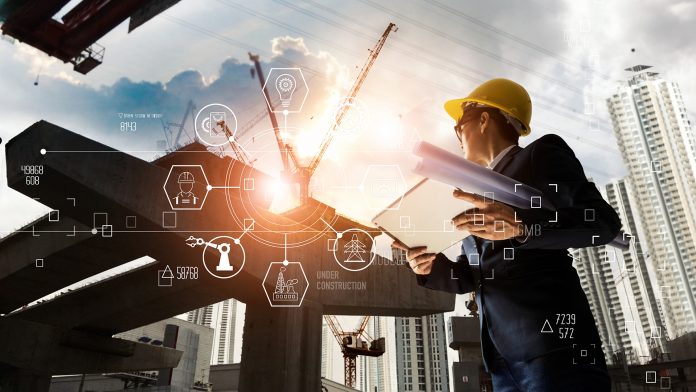

While many organizations are struggling with the challenges of managing, planning, and executing construction projects, cloud-based remote construction management tools are becoming a necessity.
While many traditional industries struggle with resistance to digital change, the GCC construction industry has taken a different approach, adopting the latest cloud-based BIM technologies to achieve the highest levels of efficiency, accuracy and transparency.
While many traditional industries struggle with resistance to digital change, the GCC construction industry has taken a different approach, embracing the latest cloud-based BIM
What is cloud-based BIM and why the shift?
Building Information Modeling (BIM) is an advanced digital process for producing comprehensive 3D models that include every engineering, architectural and structural detail of a building, with the ability to track the entire construction process from design to operation and maintenance.
<With the integration of this technology with cloud computing, users no longer need to share files or be in the same place. Instead, they can work on a single project from different locations around the world and see updates in real time, minimizing errors and making planning and execution more efficient.
Cloud platforms.
Cloud platforms such as Autodesk BIM 360, Trimble Connect, and Revizto provide integrated work environments that run on cloud servers and allow models, notes, and reports to be shared between different team members without delays or version conflicts.
Cloud platforms such as Autodesk BIM 360, Trimble Connect, and Revizto provide integrated work environments that run on cloud servers and allow models, notes, and reports to be shared between different team members without delays or version conflicts.
Benefits for performance and productivity
Adopting cloud BIM on construction sites not only adds a technical dimension, but also transforms the way of thinking and managing within architectural and engineering organizations. Some of the benefits include:
1. Real-time project management
Project managers anywhere in the world can oversee implementation phases, review plans, and monitor progress in the field, without the need for frequent site visits.
2.
2. Unprecedented international collaboration
Design and implementation teams no longer need to gather in one place. A design office in Dubai can now work with a contractor in Riyadh, and a consultant in London, within a unified platform that integrates all elements in real time.
3.
3. Reduce costs and minimize waste
Early detection of engineering or design conflicts reduces costly errors in the field, and minimizing meetings and travel reduces operational expenses.
4.
4. Enhanced security and transparency
All processes are automatically recorded and dated, and every modification to forms or documents can be tracked, promoting transparency and accountability within teams.
Examples of Saudi and GCC projects
The trend towards smart building technologies has become evident in major Saudi and GCC projects, and there are multiple examples of how cloud BIM has been successful in managing mega projects:
NEOM: City of the Future
Neom, one of the world's largest smart city projects, embraces fully digitized management. Its international teams use BIM 360 to manage designs, reports and plans. Thousands of engineers and experts from more than 40 nationalities oversee the project, in a unified digital environment.
Thousands of engineers and experts from more than 40 nationalities oversee the project, in a unified digital environment.
The Line: A model for digital integration
Within NEOM, The Line is a unique experiment in building a linear city with no cars or carbon emissions. The project is executed through fully digital management, including design, planning, execution, and monitoring phases, using cloud-based BIM modeling with AI support to analyze logistics and engineering data.
The Line Metro
As part of NEOM, The Line is an experiment in building a linear city with no cars and zero emissions.
Riyadh Metro
<The **Riyadh Metro** project, one of the most important transportation projects in the Middle East, adopted cloud BIM technologies to coordinate the work between more than 20 contracting and consulting engineering firms. The cloud platform enabled the teams to accurately track work on stations, tunnels, and tracks, and helped maintain quality execution and reduce delivery time. Riyadh Metro.
Qatar's Pearl Project
In Qatar, the Pearl Project used cloud-based BIM to design and implement a number of residential and commercial complexes, which helped connect local engineers and contractors with specialized international companies, improving the quality of work and reducing model revision time by more than 35%. The Pearl Project in Qatar used cloud-based BIM to design and implement a number of residential and commercial complexes.
Dubai Creek Tower
One of the UAE's most ambitious projects, Dubai Creek Tower is being realized through cloud-connected BIM platforms that enable real-time design updates, construction monitoring, and documentation of all phases of the project.
Potential challenges
Potential Challenges: The road to digitization is not a bed of roses
Despite the growing success of cloud adoption on construction sites, there are some challenges that need to be addressed to maximize the benefits:
Engineering data security
Engineering data security
The risk of cyber intrusion and theft of project data necessitates the need for advanced cloud security, especially in sensitive projects linked to national infrastructure.
Weak digital architecture in some locations
Weak digital architecture in some locations
Despite technological advances, some construction sites in remote areas still lack a strong and stable internet connection, which hinders immediate interaction with cloud platforms.
The need for training and qualification of personnel
Moving to an integrated digital environment requires technical training for engineers, supervisors, and technicians to efficiently use cloud BIM tools.
Moving to an integrated digital environment requires technical training for engineers, supervisors, and technicians.
Is cloud management the new norm?
Future trends suggest that the adoption of cloud computing in construction will shift from being a competitive advantage to an operational necessity. With GCC governments moving to digitize economic sectors under strategic visions such as Saudi Vision 2030 and UAE Vision 2031, it is expected that all future infrastructure projects will be based on an integrated cloud environment.
Major project management is no longer limited to paper meetings and manual blueprints. We're in for a game-changing digital transformation in the world of construction. With the rise of megaprojects in the Gulf, cloud BIM stands as a strategic tool that promotes transparency, reduces costs, and increases productivity, making it a cornerstone of the future of construction site management.
2. Unprecedented international collaboration
Design and implementation teams no longer need to gather in one place. A design office in Dubai can now work with a contractor in Riyadh, and a consultant in London, within a unified platform that integrates all elements in real time.
3.
3. Reduce costs and minimize waste
Early detection of engineering or design conflicts reduces costly errors in the field, and minimizing meetings and travel reduces operational expenses.
NEOM: City of the Future
Neom, one of the world's largest smart city projects, embraces fully digitized management. Its international teams use BIM 360 to manage designs, reports and plans. Thousands of engineers and experts from more than 40 nationalities oversee the project, in a unified digital environment.
Thousands of engineers and experts from more than 40 nationalities oversee the project, in a unified digital environment.
The Line: A model for digital integration
Within NEOM, The Line is a unique experiment in building a linear city with no cars or carbon emissions. The project is executed through fully digital management, including design, planning, execution, and monitoring phases, using cloud-based BIM modeling with AI support to analyze logistics and engineering data.
The Line Metro
As part of NEOM, The Line is an experiment in building a linear city with no cars and zero emissions.
Riyadh Metro
<The **Riyadh Metro** project, one of the most important transportation projects in the Middle East, adopted cloud BIM technologies to coordinate the work between more than 20 contracting and consulting engineering firms. The cloud platform enabled the teams to accurately track work on stations, tunnels, and tracks, and helped maintain quality execution and reduce delivery time.Riyadh Metro.
Qatar's Pearl Project
In Qatar, the Pearl Project used cloud-based BIM to design and implement a number of residential and commercial complexes, which helped connect local engineers and contractors with specialized international companies, improving the quality of work and reducing model revision time by more than 35%.The Pearl Project in Qatar used cloud-based BIM to design and implement a number of residential and commercial complexes.
Dubai Creek Tower
Potential challenges
Potential Challenges: The road to digitization is not a bed of roses
Despite the growing success of cloud adoption on construction sites, there are some challenges that need to be addressed to maximize the benefits:
Engineering data security
Engineering data security
The risk of cyber intrusion and theft of project data necessitates the need for advanced cloud security, especially in sensitive projects linked to national infrastructure.Weak digital architecture in some locations
Weak digital architecture in some locations
Despite technological advances, some construction sites in remote areas still lack a strong and stable internet connection, which hinders immediate interaction with cloud platforms.
The need for training and qualification of personnel
Moving to an integrated digital environment requires technical training for engineers, supervisors, and technicians to efficiently use cloud BIM tools.
Moving to an integrated digital environment requires technical training for engineers, supervisors, and technicians.